The sensory farm at Lucky Penny Pastures is designed with the intention to support children and adults who may have developmental disabilities, sensory processing differences or other needs that can be supported by interacting with animals, nature, and sensory-friendly activities. At our farm, you will be able to enjoy our animals at your leisure, have a picnic, use our farm as a “home” therapy session with one of your providers, or use it as a community setting to help generalize skills that are being worked on in the home or clinical settings.
What is a Sensory Farm?
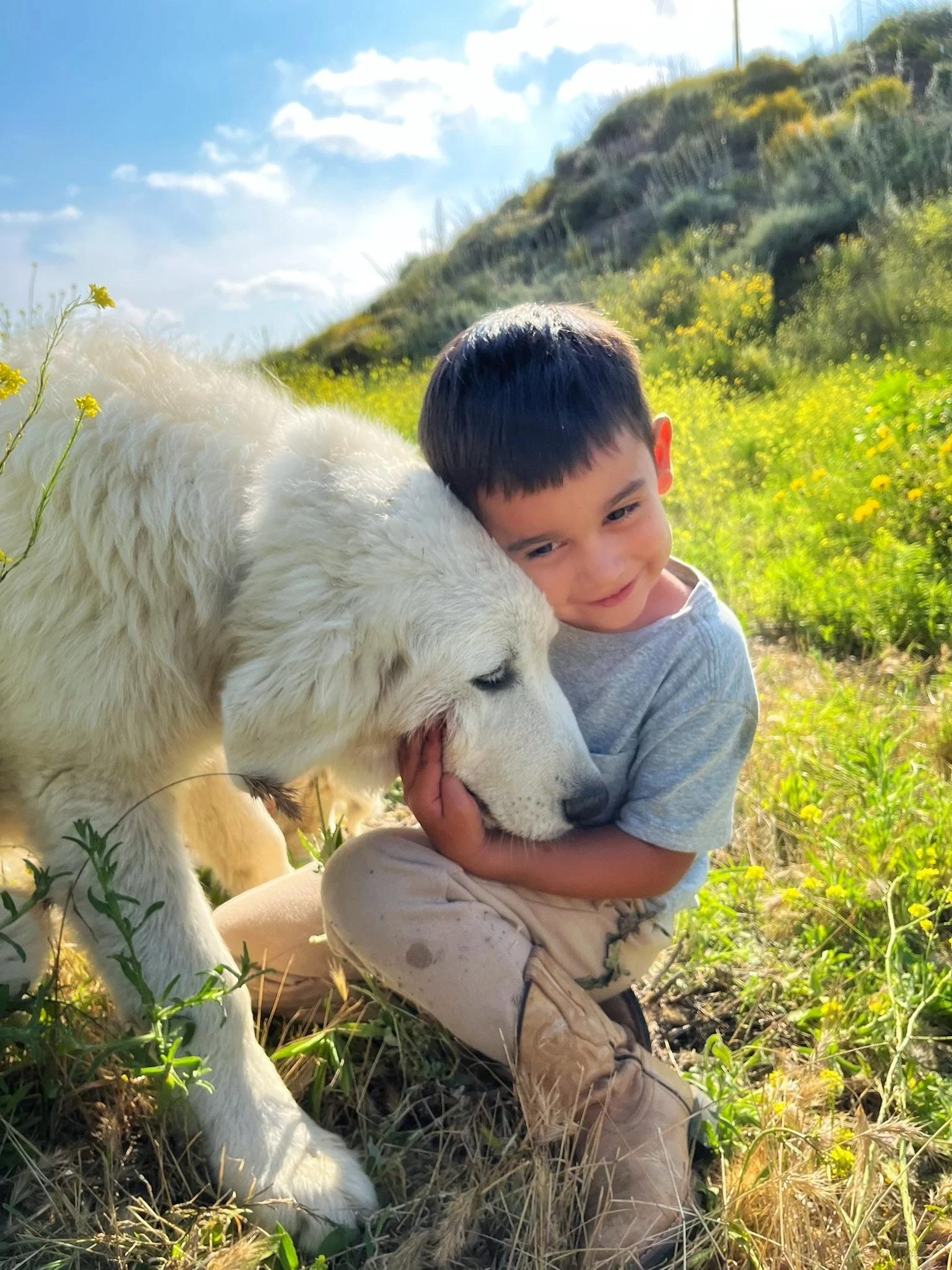
Social Emotional Development: Animal interactions promote empathy, emotional regulation and self-confidence. Children learn to recognize nonverbal cues, practice gentle touch, and develop nurturing behaviors while interacting with farm animals. Interacting with animals can reduce anxiety and stress, increase emotional security, improve social engagement, build empathy and compassion.
Sensory Integration and Regulation: A farm environment provides natural sensory input that supports neurological development. A sensory rich environment may include: textures (fur, feathers, hay, soil) sounds (animals, wind, nature), movement (walking on uneven terrain, animal interaction), smells (plants, earth, animals). This type of environment can improve emotional regulation, reduce over-stimulation and increase focus and engagement.
Physical Development: Farm activities promote gross motor development, coordination and strength. Children engage in purposeful moment while caring for animals and exploring their outdoor environment. Activities include: carrying feed buckets, walking on natural terrain, grooming animals, collecting eggs, gardening activities. These types of farm activities support balance, coordination, core strength and motor planning.
Cognitive Development and Experiential Learning: Providing children with hands on opportunities helps them learn cause and effect, responsibility and routine, life cycles of animals, problem solving skills. Experiential learning can improve retention, engagement, curiosity and independent thinking.
Mental Health and Well Being: Nature-based programs have been shown to improve children’s mental health and emotional resilience. Interaction with animals can provide a calming and non-judgmental environment children can thrive in.